
Choosing the right sealing material is critical for industrial safety, efficiency, and long-term performance. Engineers and procurement teams often struggle with how to choose compressed gasket jointing sheet that can handle temperature, pressure, and chemical exposure without failure. This industrial gasket jointing sheet guide explains the selection process in a clear, practical way, helping you avoid costly mistakes and choose a gasket solution that delivers reliable sealing across demanding industrial applications in India.
Understanding Compressed Gasket Jointing Sheets and Their Role in Industry
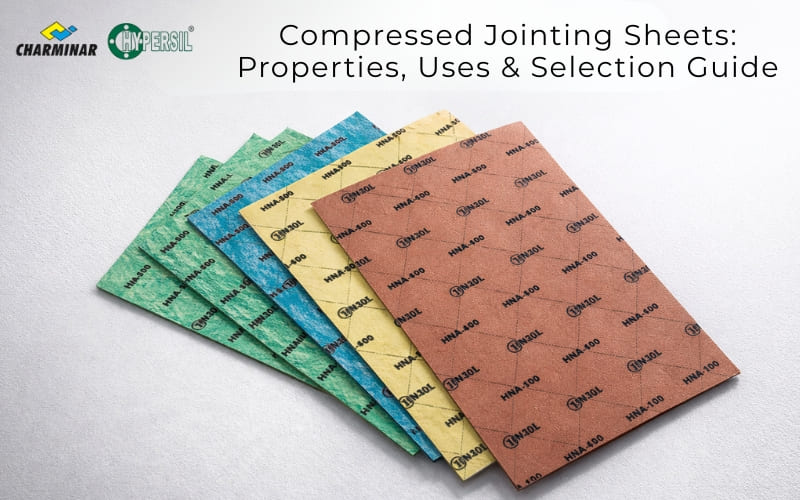
Before diving into selection criteria, it’s important to understand what compressed gasket sheets are and why they are widely used. Compressed gasket jointing sheets are manufactured by compressing fibres with elastomeric binders to create a dense, flexible sealing material. These sheets are designed to seal flanges, valves, pumps, and pipelines where leakage control is essential.
In modern industries, non asbestos jointing sheets dominate this category due to safety regulations and environmental standards. They offer excellent resistance to heat, pressure, oils, fuels, and chemicals while being safer to handle than legacy asbestos-based materials. When evaluating compressed gasket jointing sheet selection, industries focus on consistency, durability, and compliance with operational requirements. As a trusted gasket jointing sheets manufacturer, Charminar Jointings emphasizes selecting materials based on real operating conditions rather than generic specifications.
Key Factors to Consider When Choosing Gasket Jointing Sheet for Industrial Applications
Selecting the right gasket is not about choosing the most expensive option, it’s about choosing the correct one. When learning how to choose compressed gasket jointing sheet, you must evaluate multiple technical and operational factors together.
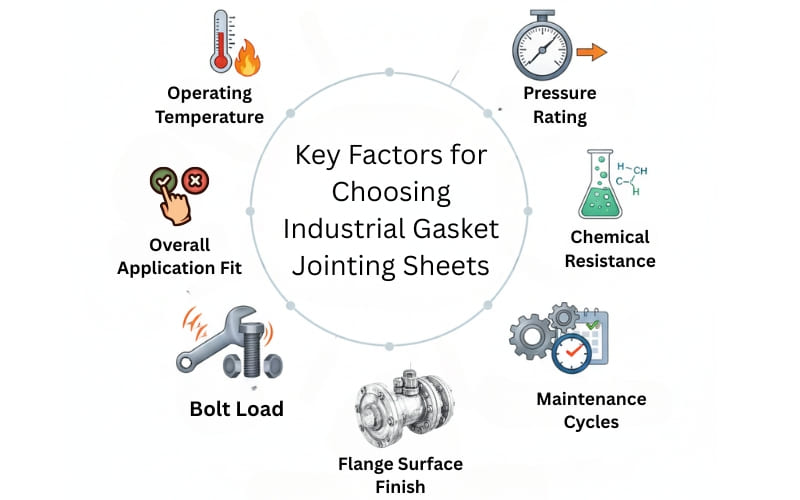
The most critical parameters include operating temperature, pressure rating, and the type of media being sealed. A gasket that performs well under heat may fail when exposed to aggressive chemicals. Similarly, pressure fluctuations can cause blowouts if compressibility and recovery are not balanced correctly. For industrial buyers, choosing a gasket jointing sheet for industrial applications also involves considering flange surface finish, bolt load, and maintenance cycles. A structured gasket sheet selection guide ensures that performance expectations match real-world conditions, reducing downtime and improving plant reliability.
Material Composition: Why Non-Asbestos Jointing Sheets Matter
Material composition plays a decisive role in gasket performance. Today, non asbestos jointing sheets are the industry standard across India due to strict safety and regulatory norms. These sheets typically use aramid fibres, cellulose fibres, or mineral fillers bonded with NBR or similar elastomers.
Non-asbestos compressed gasket sheets provide a balanced combination of strength, flexibility, and chemical resistance. They are suitable for oil & gas, chemical processing, power generation, and general industrial use. When deciding the right gasket jointing sheet for industry, material compatibility with the sealing media is crucial. For example, chemical plants require gaskets with proven resistance charts, while boilers demand high-temperature stability. Charminar Jointings manufactures non-asbestos solutions engineered to meet these diverse industrial demands.
Temperature, Pressure, and Chemical Compatibility: The Core Selection Criteria
One of the most common questions in People Also Ask is: How do I select a gasket for high temperature and pressure applications? The answer lies in understanding performance limits. Temperature resistance determines whether a gasket will harden, crack, or lose elasticity over time. Pressure rating defines its ability to maintain a seal without extrusion or blowout.
Chemical compatibility is equally critical. Even a high-grade gasket can fail prematurely if exposed to incompatible fluids. When mastering how to choose compressed gasket jointing sheet, always cross-check operating media against a chemical resistance chart. This step is often overlooked but is essential for long-term sealing performance. Industrial users in India increasingly rely on compressed gasket sheets that are tested under real operating environments rather than theoretical limits.
Comparing Compressed Gasket Sheets and Rubber Gaskets
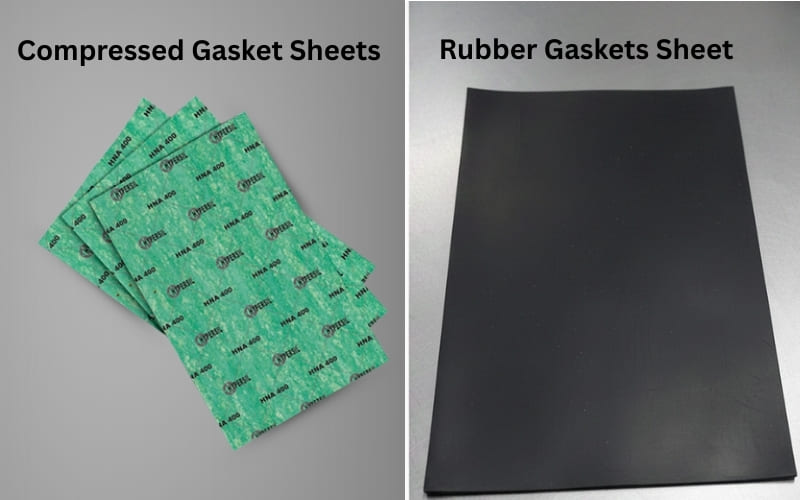
Understanding comparisons helps buyers make informed decisions. Below is a simplified comparison to clarify selection:
| Feature | Compressed Gasket Sheets | Rubber Gaskets |
| Temperature Resistance | Medium to High | Low to Medium |
| Pressure Handling | High | Limited |
| Chemical Resistance | Excellent (grade-dependent) | Moderate |
| Industrial Use | Heavy-duty industrial sealing | Light-duty applications |
| Compliance | Suitable for regulated industries | Limited compliance |
For industrial applications, compressed gasket sheets are preferred due to their stability and versatility. This comparison reinforces why compressed gasket jointing sheet selection is critical for demanding environments.
Industry-Specific Applications and Selection Approach
Different industries require different sealing priorities. In chemical and petrochemical plants, resistance to aggressive media is paramount. Power plants and boilers prioritize temperature and pressure endurance. Food processing and pharmaceutical industries demand clean, non-contaminating materials.
Choosing the right gasket jointing sheet for industry means aligning material properties with sector-specific requirements. A comprehensive industrial gasket jointing sheet guide evaluates not only current operating conditions but also future expansion or process changes. Charminar Jointings supports industries across India by offering technical guidance and customized gasket solutions tailored to application needs.
Common Mistakes to Avoid During Gasket Sheet Selection
Many gasket failures occur not due to poor material quality but due to incorrect selection. Common mistakes include ignoring flange conditions, over-tightening bolts, and selecting sheets without verifying chemical compatibility. Another frequent error is assuming one gasket type fits all applications.
When learning how to choose compressed gasket jointing sheet, avoid relying solely on price or generic specifications. Instead, consult a reliable gasket jointing sheets manufacturer who understands industrial challenges and provides data-backed recommendations.
Frequently Asked Questions (FAQs)
What is the best way to choose a compressed gasket jointing sheet for industrial use?
The best approach is to evaluate temperature, pressure, and chemical exposure together and select a non-asbestos compressed gasket sheet that meets all three requirements.
Are non asbestos jointing sheets suitable for high-temperature applications?
Yes, high-quality non-asbestos jointing sheets are designed to handle elevated temperatures depending on fibre and binder composition.
How do I know which gasket sheet is right for my industry?
Follow an industrial gasket jointing sheet guide that considers application type, operating conditions, and compliance requirements
Do compressed gasket sheets work better than rubber gaskets?
For heavy-duty industrial sealing, compressed gasket sheets generally outperform rubber gaskets in pressure and temperature resistance.
Make the Right Choice with Expert Guidance
Understanding how to choose compressed gasket jointing sheet is essential for safe, efficient, and leak-free industrial operations. By focusing on material composition, operating conditions, and industry requirements, you can ensure long-term sealing performance. As a trusted name in India, Charminar Jointings offers expert guidance and high-quality compressed gasket sheets engineered for demanding applications. Explore our product range and consult our technical team to select the right gasket jointing sheet for your industry with confidence.