Industrial leakage, flange failures, and unplanned shutdowns often trace back to one overlooked factor, incorrect gasket material. Compressed Jointing Sheets are among the most widely used sealing materials across refineries, power plants, chemical industries, and heavy engineering units. But not all sheets are created equal. Understanding their composition, performance range, and selection criteria helps engineers choose safer, longer-lasting sealing solutions, especially in demanding Indian industrial conditions.
What Are Compressed Jointing Sheets?
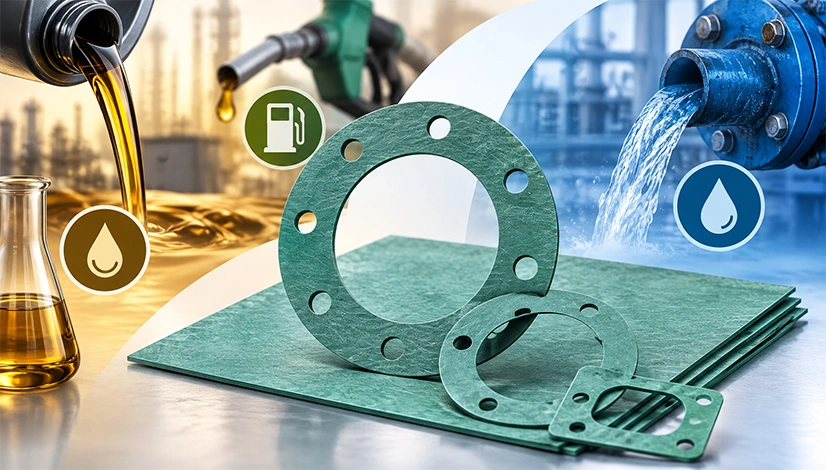
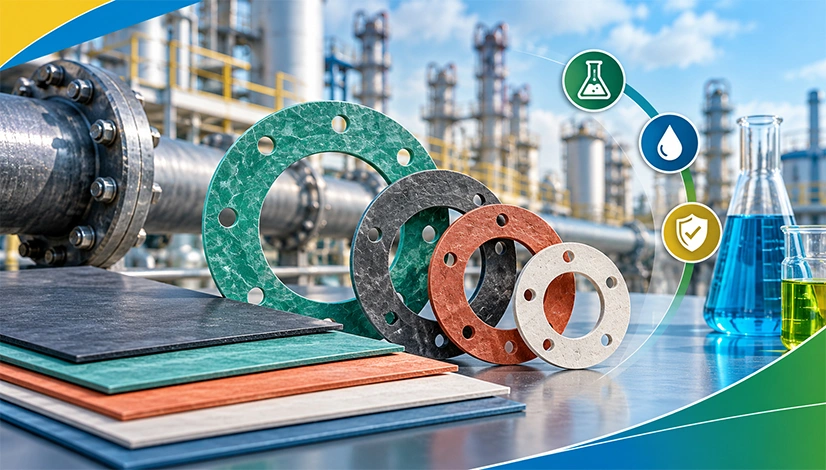
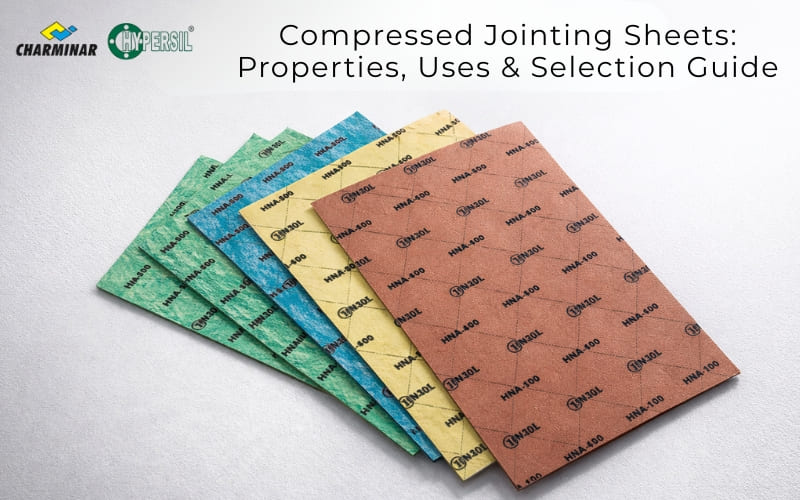
Compressed Jointing Sheets are engineered sealing materials manufactured by compressing fibers with elastomer binders under controlled heat and pressure. The compression process enhances density, tensile strength, and sealing capability, making them suitable for static flange applications.
Depending on composition, they are categorized as:
- Non asbestos compressed jointing sheets – Made with aramid, cellulose, mineral fibers and rubber binders.
- Compressed asbestos jointing sheets – Manufactured using asbestos fibers with elastomers (legacy systems).
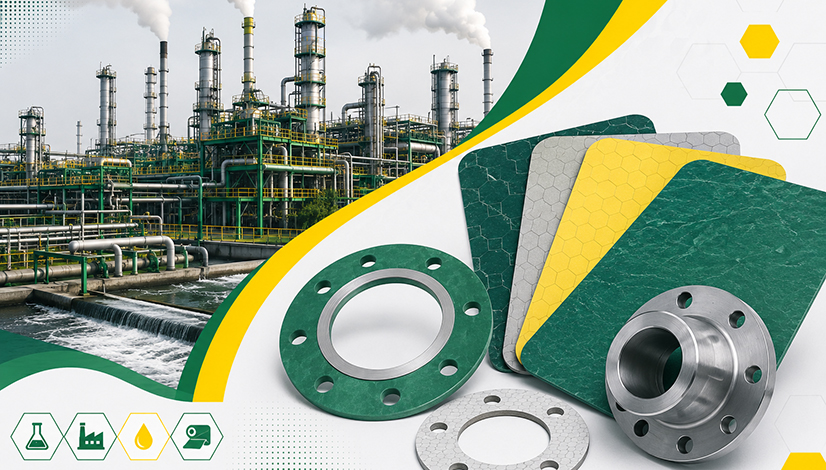
Modern industries increasingly prefer non-asbestos variants due to safety and regulatory considerations. These sheets are used as industrial gasket sheets for sealing pipelines, boilers, pumps, valves, and heat exchangers.
Their popularity comes from balanced performance, good compressibility, recovery, and resistance to moderate heat and pressure conditions.
Key Jointing Sheet Material Properties
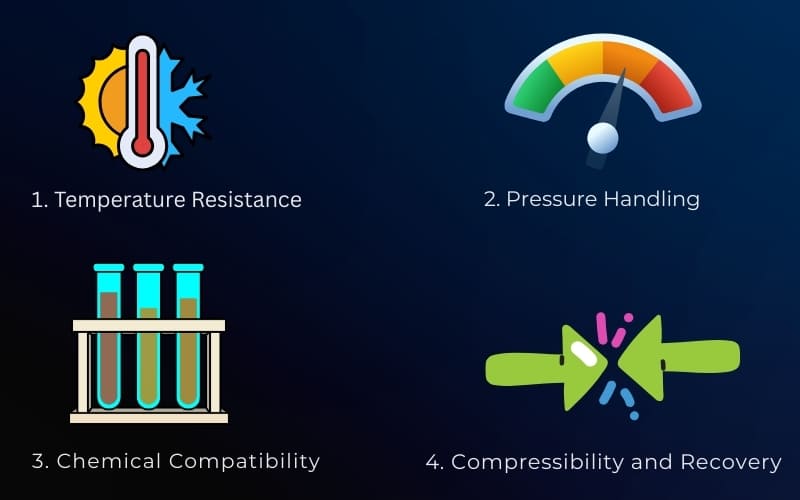
The effectiveness of Compressed Jointing Sheets depends on their material properties. These characteristics determine how well they perform under operational stress.
1. Temperature Resistance
High temperature gasket sheets are designed to withstand steam and thermal cycling without degradation. Non-asbestos grades typically operate efficiently across wide temperature ranges.
2. Pressure Handling
Compressed gasket jointing sheets offer excellent resistance to internal pressure when properly installed in flange assemblies.
3. Chemical Compatibility
Modern elastomer blends enhance resistance to oils, fuels, mild acids, and solvents, important for petrochemical and process industries.
4. Compressibility and Recovery
These sheets deform under load to create a tight seal and recover when pressure reduces, preventing leakage over time.
Understanding these jointing sheet material properties is critical before selecting a grade for industrial applications.
Applications of Compressed Jointing Sheets in India

In India’s diverse industrial landscape, Compressed Jointing Sheets are used across multiple sectors:
- Oil and gas pipelines
- Power generation plants
- Chemical processing industries
- Automotive and heavy engineering
- Marine and boiler systems
Non asbestos compressed jointing sheets are especially preferred in export-oriented and safety-conscious industries. Their adaptability makes them reliable in both medium and moderately high temperature environments.
Manufacturers such as Charminar Jointings supply precision-engineered sheets designed to meet Indian operational conditions, including fluctuating pressure cycles and high humidity environments.
Compressed Asbestos vs Non-Asbestos Jointing Sheets
Although compressed asbestos jointing sheets were widely used in older plants, modern industries are transitioning toward non-asbestos alternatives.
| Parameter | Compressed Asbestos Jointing Sheets | Non Asbestos Compressed Jointing Sheets |
| Health & Safety | Hazardous fibers | Safe fiber alternatives |
| Regulatory Compliance | Restricted in many regions | Globally accepted |
| Performance Stability | Good heat resistance | Balanced heat + chemical resistance |
| Environmental Impact | Poor | Eco-friendly |
| Modern Industry Preference | Declining | Industry standard |
From a long-term liability and sustainability standpoint, non-asbestos options are the smarter investment.
How to Choose the Right Grade: Gasket Sheet Selection Guide
Selecting the correct Compressed Jointing Sheets requires evaluating several technical factors. This gasket sheet selection guide simplifies the decision process.
Step 1: Identify Operating Temperature
Confirm maximum and continuous operating temperature. High temperature gasket sheets may be required for steam or boiler applications.
Step 2: Determine Pressure Class
Match the sheet grade to flange pressure ratings to prevent blowouts.
Step 3: Evaluate Chemical Exposure
Check compatibility with oils, fuels, acids, or solvents.
Step 4: Assess Flange Surface Condition
Rough or uneven flanges may require sheets with better compressibility.
Step 5: Compliance & Safety Requirements
Non-asbestos grades are recommended for modern installations and export projects.
Consulting a reliable gasket sheet manufacturer in India ensures proper grade selection based on application-specific data.
Manufacturing Quality Matters
The performance of compressed gasket jointing sheets depends heavily on manufacturing precision. Factors such as fiber distribution, binder ratio, curing temperature, and compression force influence durability.
Reputed manufacturers like Charminar Jointings focus on:
- Controlled compression technology
- Uniform fiber dispersion
- Thickness accuracy
- Consistent density across batches
These quality controls enhance sealing integrity and reduce premature failures in industrial operations.
For a complete product range, explore their non asbestos jointing sheets collection designed for diverse industrial sealing applications.
Frequently Asked Questions
1. What are Compressed Jointing Sheets used for?
They are used for sealing static flange connections in pipelines, boilers, pumps, and industrial equipment.
2. How long do compressed jointing sheets last?
Service life depends on temperature, pressure, and chemical exposure. Properly selected grades can last several years under normal operating conditions.
3. Are compressed asbestos jointing sheets still available in India?
Limited legacy usage exists, but industries increasingly prefer non-asbestos alternatives for safety and export compliance.
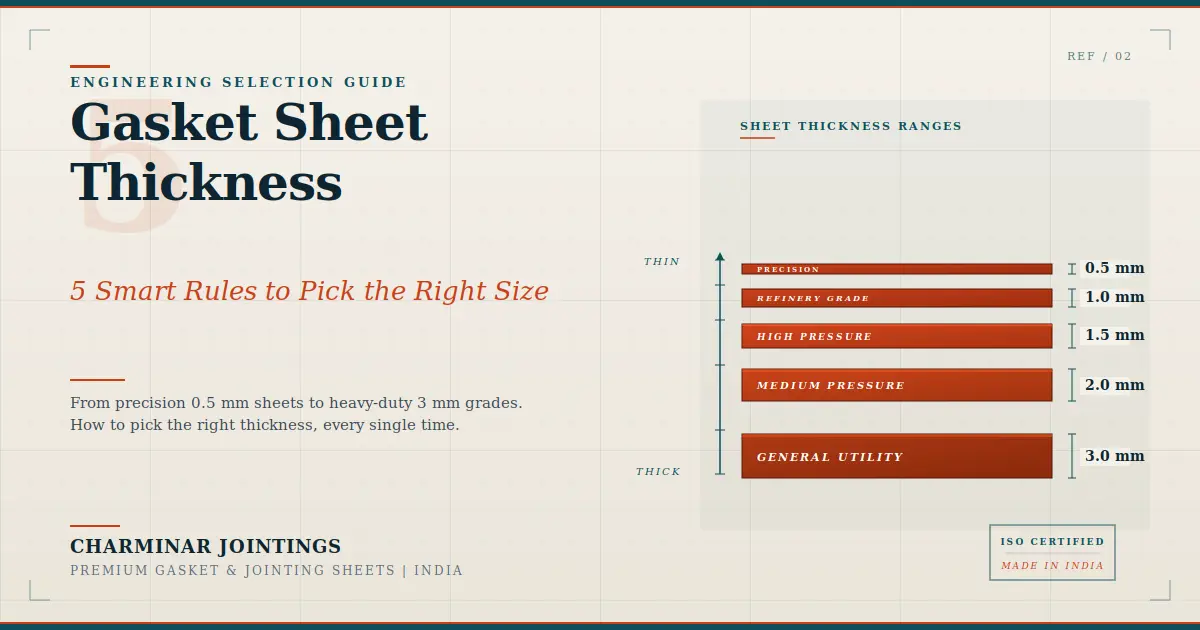
4. How do I choose the right gasket sheet thickness?
Thickness selection depends on flange condition, pressure rating, and sealing surface finish.
5. Where can I source reliable industrial gasket sheets in India?
Choose an experienced gasket sheet manufacturer in India with proven quality control and application support, such as Charminar Jointings.
Final Thoughts
Compressed Jointing Sheets remain a cornerstone of industrial sealing systems. However, performance depends not only on the material itself but on proper grade selection, installation, and sourcing from reliable manufacturers.
By understanding jointing sheet material properties, evaluating operating conditions, and prioritizing safety-focused non-asbestos grades, industries can significantly reduce downtime and maintenance costs.
If you are looking for dependable, high-performance industrial gasket sheets tailored for Indian conditions, the engineering team at Charminar Jointings can help you identify the right solution for your specific application. For technical guidance, product specifications, or bulk requirements, feel free to get in touch with our experts to discuss your sealing needs in detail.