What Are Low-Emission Gasket Sheets?
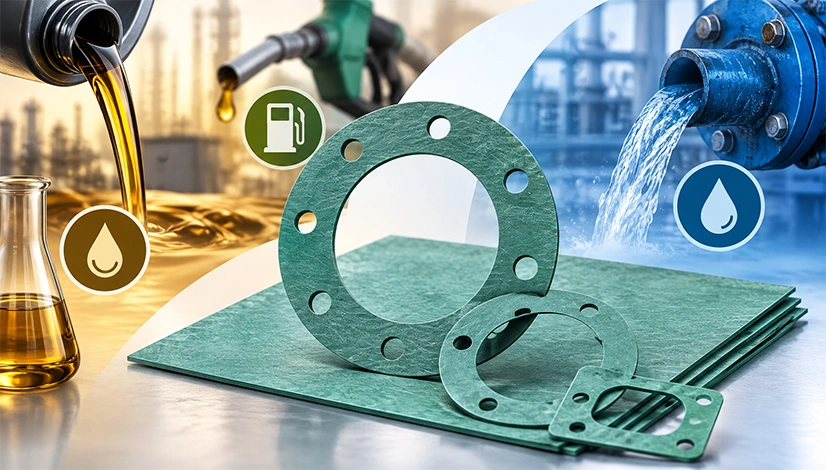
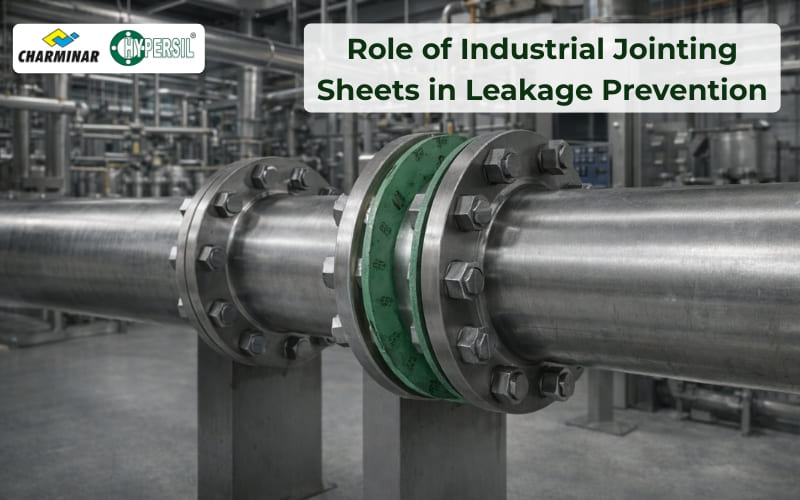
Low-Emission Gasket Sheets are industrial sealing sheets engineered for applications where leak control, safety and long service life are critical. They are commonly used between flange faces to create a stable barrier against gases, vapours, oils, steam, water and chemicals.
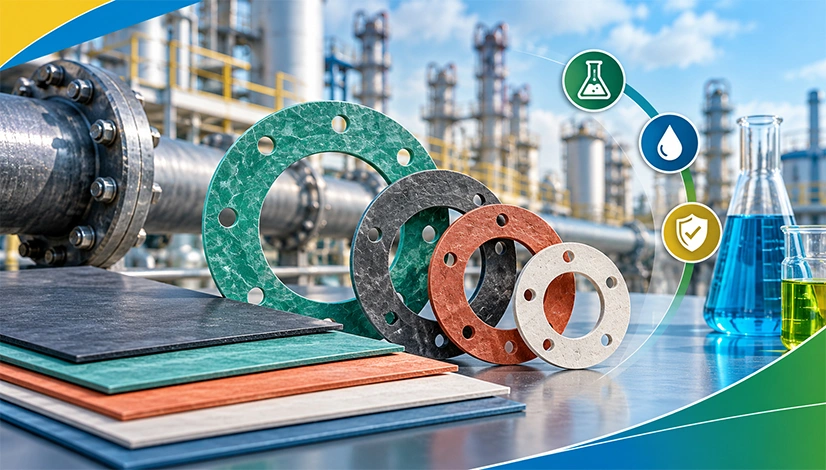
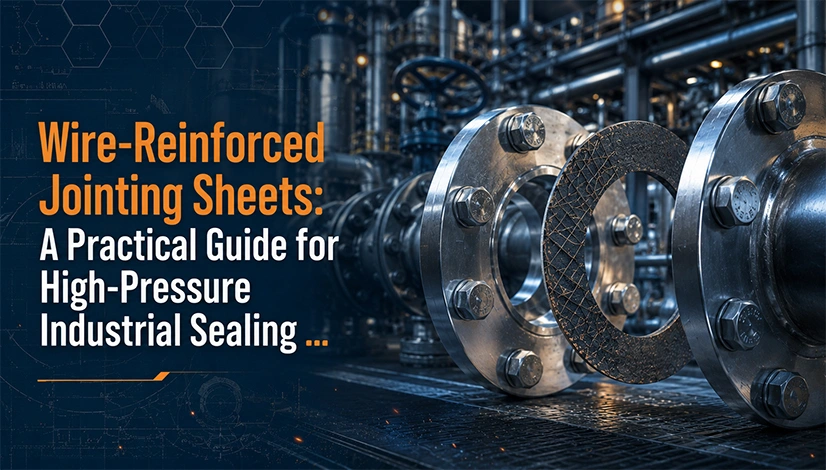
Unlike ordinary gasket sheets that may relax, crack or lose sealing stress under heat and pressure, Low-Emission Gasket Sheets are chosen for better compressibility, recovery, chemical compatibility and dimensional stability. For high-pressure or demanding applications, reinforced materials may provide additional strength and load retention. For buyers comparing material options, Charminar Jointings offers Non Asbestos Compressed Jointing Sheets With Wire for applications that require added strength, durability and industrial sealing reliability.
Why Fugitive Emissions Matter in Flange Joints
According to Wikipedia’s overview of fugitive gas emissions, fugitive emissions are unwanted gas releases linked with oil, gas and related industrial activities. Wikipedia’s gas leak page also explains that industrial equipment leaks are commonly treated as fugitive emissions and can create environmental and safety concerns.
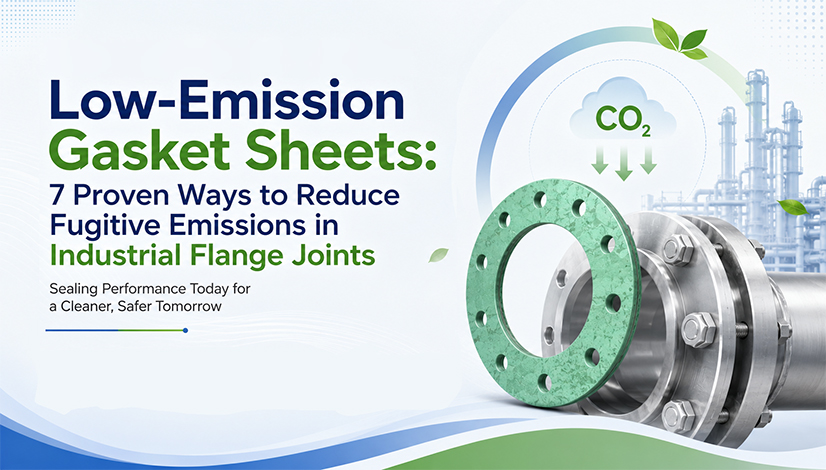
In plants, these emissions may escape through flange joints, valve covers, pump seals, compressor connections and pipeline fittings. The release may be too small to see, but over time it can lead to odor complaints, fire hazards, corrosion, product loss and shutdown delays. Low-Emission Gasket Sheets help reduce this risk by improving the sealing reliability of one of the most common leak points: the bolted flange joint.
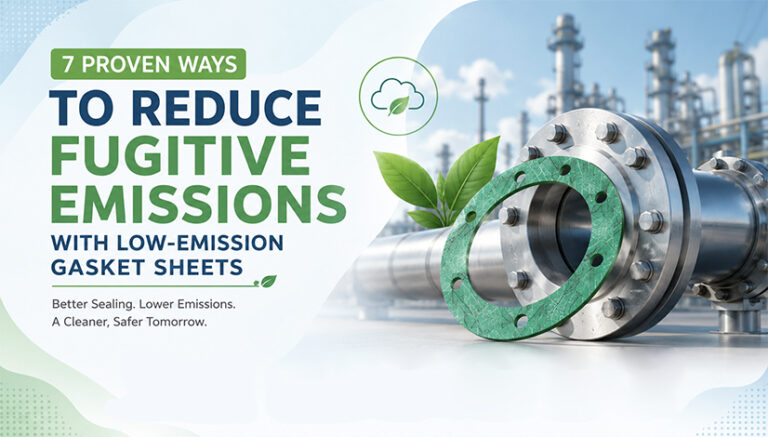
7 Proven Ways to Reduce Fugitive Emissions with Low-Emission Gasket Sheets
1. Select Low-Emission Gasket Sheets by Media Compatibility
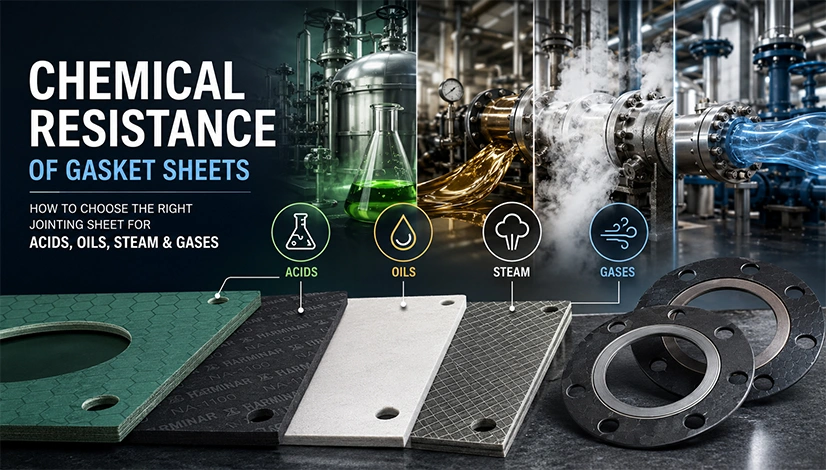
Every fluid or gas affects gasket material differently. Acids, hydrocarbons, steam, fuel oils, solvents and industrial gases can swell, harden or weaken the wrong sheet. Before selecting Low-Emission Gasket Sheets, check the media, concentration, temperature and pressure. A material that works in water service may not be suitable for aggressive chemicals.
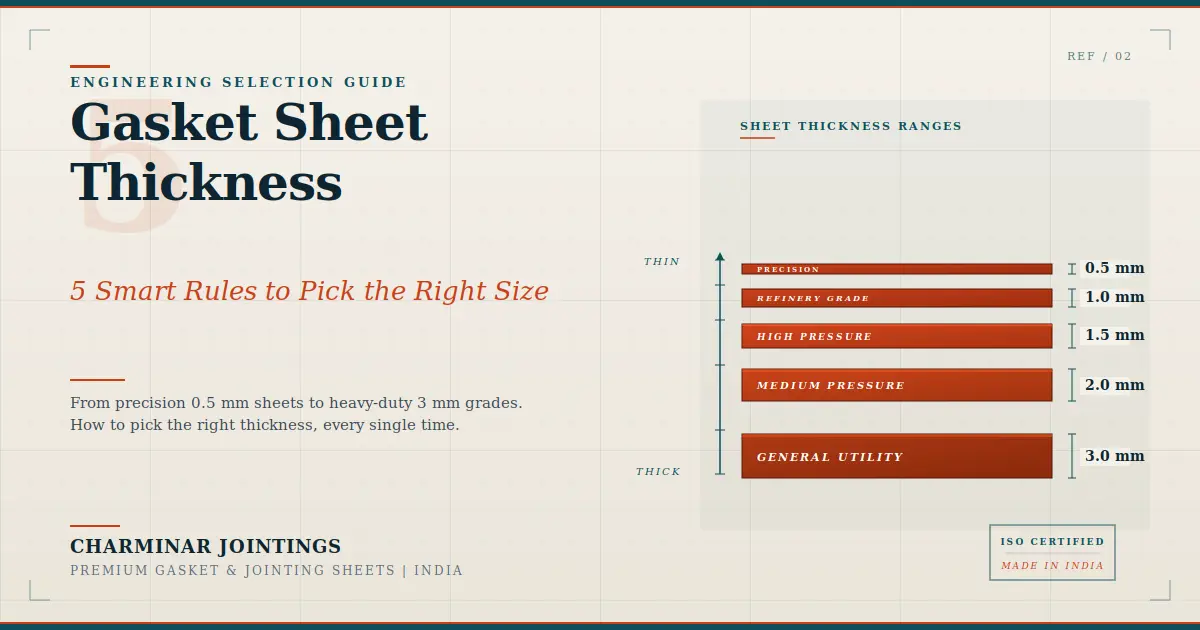
2. Choose the Correct Thickness
Thickness affects compression and sealing stress. A very thick gasket may compress unevenly, while a very thin sheet may not compensate for flange imperfections. Low-Emission Gasket Sheets should be selected to balance conformability and load retention. Smooth flanges often need controlled thickness; older flanges may need better surface adaptation.
3. Control Bolt Load Properly
Even premium Low-Emission Gasket Sheets can fail if bolts are tightened unevenly. Poor bolt load creates gaps and leakage paths. Use a cross-pattern tightening sequence, staged torque, calibrated tools and final checks. This helps the sheet seat evenly and maintain a stable seal during operation.
4. Match Material with Temperature and Pressure
High temperature, steam cycling and pressure fluctuation can reduce gasket life. Low-Emission Gasket Sheets should be evaluated for continuous operating temperature, not only peak temperature. For steam lines, compressors, hot oil systems and refinery pipelines, the selected grade must resist thermal stress and pressure cycling.
5. Inspect Flange Surface Before Installation
A damaged flange can make even the best gasket fail. Scratches, corrosion, pitting, old gasket residue and flange misalignment can create leak paths. Before installing these sheets, clean the surface, remove deposits and inspect both flange faces. Good surface preparation improves the chance of long-term sealing.
6. Do Not Reuse Old Gaskets
A used gasket has already lost compression recovery. Reusing it may save time during maintenance, but it increases leakage risk. these sheets should be installed fresh whenever a flange is opened, especially in gas, chemical, fuel and high-temperature lines.
7. Work with a Reliable Manufacturer
Low-emission performance depends on consistent material quality. these sheets should have reliable thickness tolerance, fibre composition, compressibility, recovery and chemical resistance. Poor-quality sheets may look similar but fail early under real plant conditions. For project-specific selection, buyers can contact Charminar Jointings and discuss operating media, temperature, pressure and flange requirements before finalizing the material.
Industrial Applications of Low-Emission Gasket Sheets
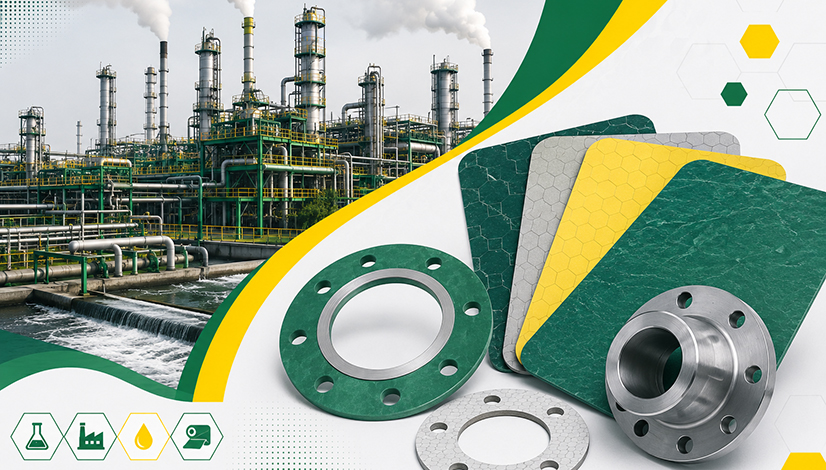
these sheets are useful wherever leakage control is linked with safety, compliance and efficiency. Common applications include flange joints, heat exchangers, pumps, valves, compressors, fuel lines, chemical pipelines, steam systems, water treatment units and utility services.
Industries such as oil and gas, petrochemicals, fertilizers, power generation, pharmaceuticals, marine engineering, food processing and heavy manufacturing can benefit from these sheets when the correct grade is matched with service conditions.
How to Choose the Right Low-Emission Gasket Sheets
Start with the operating media, then check temperature, pressure, flange type, bolt load, vibration and thermal cycling. Also confirm whether the application needs non-asbestos, wire-reinforced, beater addition or another industrial gasket material.
Procurement teams should ask for technical data instead of relying only on product names. The right these sheets reduce trial-and-error, improve inventory planning and help maintenance teams standardize materials across similar applications.
Installation Mistakes to Avoid
Avoid choosing gasket material only by price, ignoring chemical compatibility, using excessive thickness, tightening bolts randomly, installing over dirty flanges and reusing old sheets. Each mistake can reduce the performance of these sheets and increase the chance of fugitive emissions.
Correct storage, clean cutting, proper alignment and controlled tightening are part of the sealing system. A good gasket performs best when installation discipline is also strong.
Final Thoughts on Low-Emission Gasket Sheets
Fugitive emissions may be small, but their impact can be serious. They affect safety, maintenance cost, plant uptime and environmental performance. these sheets help industries build more reliable flange joints when selected and installed correctly.
For industrial buyers, the best approach is to evaluate media, pressure, temperature, flange condition and supplier quality before final selection. With the right application match, these sheets can support safer operations, fewer leak events and stronger long-term sealing performance.
FAQs on Low-Emission Gasket Sheets
Q1. What are Low-Emission Gasket Sheets used for?
these sheets are used to reduce leakage and fugitive emissions from industrial flange joints, pipelines, valves, pumps, compressors and chemical processing equipment.
Q2. Are Low-Emission Gasket Sheets suitable for chemical plants?
Yes. these sheets can be suitable for chemical plants when the selected grade matches the chemical media, pressure and temperature of the application.
Q3. Can Low-Emission Gasket Sheets reduce maintenance costs?
Yes. By improving seal reliability, these sheets can reduce repeated leakage repairs, shutdown risks and gasket replacement frequency.
Q4. What is the most important factor when choosing Low-Emission Gasket Sheets?
The most important factor is application compatibility. The sheet must match the media, temperature, pressure, flange condition and installation method.