HNA-ACID Gasket Sheets: 7 Selection Rules for Acid & Alkaline Media

HNA-ACID gasket sheets for acid and alkaline media
HNA-ACID Gasket Sheets are important for teams that need non-asbestos jointing sheets for acid and alkaline media. In many plants, the gasket is a small part of the assembly, but it decides whether the joint can support safe sealing under the right operating condition. For buyers, maintenance engineers and plant teams, the right selection should not be based on a generic gasket name. It should be based on media, material composition, temperature, pressure, compressibility, recovery and available technical data.
Charminar Jointings lists HNA-ACID as a non-asbestos jointing sheet made with aramid fibre and CSM elastomers. The product page positions it for different aggressive media and mentions excellent chemical resistance to acid and alkaline media. This blog explains practical selection rules for HNA-ACID Gasket Sheets without adding claims outside the product information available on the website. HNA-ACID Gasket Sheets are reviewed here as a specific product grade, not as a generic gasket category.

Table of Contents

What Makes HNA-ACID Gasket Sheets Relevant for Aggressive Media
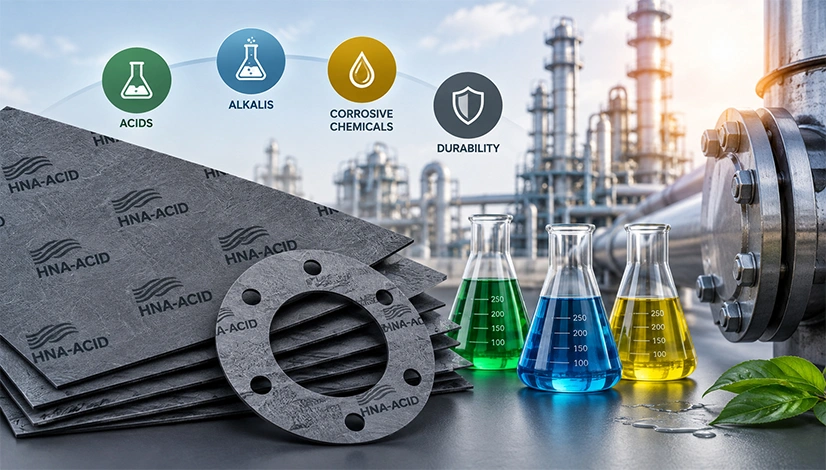
HNA-ACID gasket sheet for aggressive chemical media

HNA-ACID Gasket Sheets are relevant where the process media includes acidic or alkaline exposure and the buyer wants a non-asbestos jointing sheet listed for such service. On the website, HNA-ACID is clearly presented under non-asbestos jointing sheets. Its application note states that it is for different aggressive media and has excellent chemical resistance to acid and alkaline media.

This makes HNA-ACID Gasket Sheets a focused topic for plants that do not want a broad, one-size-fits-all gasket selection. HNA-ACID Gasket Sheets should be shortlisted only after matching the application with the website-listed media guidance. The product should be reviewed with the actual media name, concentration, temperature and pressure. If the application includes aggressive media, the HNA-ACID product page and Charminar chemical resistance chart should be checked before choosing the jointing sheet.

Rule 1: Match HNA-ACID Gasket Sheets with Acid and Alkaline Media

The first rule is to match HNA-ACID Gasket Sheets with the exact media in the plant. Acid and alkaline service should never be treated as one general category. A sheet that works for one medium may not be suitable for another medium at a different concentration or temperature. Charminar’s chemical resistance chart lists multiple media and ratings across HNA grades, including HNA-ACID.

For example, the product page mentions acid and alkaline media, while the chart helps users compare listed media such as acetic acid, nitric acid, sodium hydroxide, steam, hydrogen, natural gas, diesel oil and other entries. This does not mean one product should be used everywhere. It means buyers should verify the listed rating and then confirm suitability for their actual service condition.

Acid resistant jointing sheet selection

A practical acid resistant jointing sheet selection process starts with a simple question: what is flowing through the joint? HNA-ACID Gasket Sheets should be reviewed against this answer before approval. After that, the team should check whether the operating media is included in the website’s chemical resistance chart and whether the plant condition is within the listed product limits.

Rule 2: Check the Material Composition of HNA-ACID Gasket Sheets

The HNA-ACID page lists the material composition as aramid fibre and CSM elastomers. This matters because the composition is a core part of product selection. When a buyer compares HNA-ACID Gasket Sheets with other non-asbestos jointing sheets, the decision should not be made only by price or sheet thickness. It should also consider the grade, binder and intended media.
For specification teams, this helps keep the purchase aligned with the product page. The blog should not claim hidden ingredients or unlisted benefits. It is safer to mention exactly what the site provides: HNA-ACID Gasket Sheets are non-asbestos jointing sheets with aramid fibre and CSM elastomers, designed for aggressive media with acid and alkaline resistance.

Non-asbestos jointing sheets for chemical media

Non-asbestos jointing sheets for chemical media should be selected through grade-specific product data. HNA-ACID Gasket Sheets should be matched with this grade-specific data before enquiry. For HNA-ACID, the website-supported point is clear: the product is placed in non-asbestos jointing sheets and positioned for acid and alkaline media.

Rule 3: Review Temperature and Pressure Limits of HNA-ACID Gasket Sheets

Selection becomes practical only when temperature and pressure are checked. The HNA-ACID product page lists maximum peak temperature as 200 degrees Celsius, maximum continuous temperature as 150 degrees Celsius and maximum operating pressure as 60 kg/cm2. These values help buyers understand the application boundary before shortlisting HNA-ACID Gasket Sheets.
The correct approach is not to use the highest number as a casual guarantee. It is to compare the site’s listed values with actual plant conditions and then confirm with the manufacturer if the service is critical. If the joint operates close to the maximum values, the maintenance team should be more careful with installation condition, flange surface, bolt tightening and media exposure.

Chemical gasket material temperature pressure check

A chemical gasket material temperature pressure check reduces wrong selection. For HNA-ACID Gasket Sheets, the listed temperature and pressure values should be included in the buyer’s note so the product is not confused with another HNA grade. HNA-ACID Gasket Sheets should remain linked to the correct grade name during enquiry.

Rule 4: Compare Compressibility, Recovery and Sealability Data

HNA-ACID Gasket Sheets should also be reviewed through the technical specification table. The website lists compressibility as 7.0-17.0% using ASTM F36A and recovery as more than 40% using ASTM F36A. It also lists sealability against nitrogen under DIN 3535 as less than 1.5 cm3/min.
These values should be used as technical reference points during product comparison. Compressibility relates to how the sheet responds under load, while recovery helps the joint maintain sealing contact after compression. Sealability data is also useful for technical teams comparing gasket sheets for controlled sealing applications. The safest content approach is to explain what these parameters are used for, without making unverified performance promises.

Compressibility and recovery in gasket sheet selection

Compressibility and recovery in gasket sheet selection are useful for engineering review. When HNA-ACID Gasket Sheets are specified, these values should be checked together with media, pressure, temperature and flange condition.

Rule 5: Use Chemical Resistance Data Before Final Selection

The website includes a chemical resistance chart for jointing sheets. This is one of the most useful internal resources for selecting HNA-ACID Gasket Sheets. The chart lists media names and ratings across HNA-100, HNA-200, HNA-300, HNA-400, HNA-600, HNA-700 and HNA-ACID. For a buyer, this chart is a practical starting point for chemical compatibility discussion.

When reading the chart, users should avoid assuming that all acids, all alkalis or all solvents behave the same way. The chart includes different entries and not every entry carries the same rating for every grade. For general background on terms, readers may refer to Wikipedia pages on
acid and alkali, but final product selection should remain based on Charminar’s listed product data and technical support.

Chemical resistance chart for jointing sheets

The chemical resistance chart for jointing sheets helps buyers ask better questions. For HNA-ACID Gasket Sheets, it supports a more careful discussion around aggressive media instead of selecting a gasket sheet only by size or cost.

Rule 6: Consider Available Coating Options Only When Needed

The HNA-ACID product page notes that graphite coating, teflon coating and antistick coating are available on request. This is a useful point for plant teams, but it should be presented correctly. The blog should not say that every application needs a coating. It should say that these coating options are available on request, and the need should be discussed based on application and installation requirements.
For HNA-ACID Gasket Sheets, coating discussion should remain secondary to basic compatibility. HNA-ACID Gasket Sheets should first be matched with media, pressure and temperature before optional coatings are discussed. Media, temperature, pressure, product composition and specification values come first. Coating is a request-based option, not a replacement for proper product selection.

Antistick coating for jointing sheets

Antistick coating for jointing sheets may be discussed when maintenance teams want easier handling or removal, but the final decision should be linked with the actual application and manufacturer guidance.

Rule 7: Confirm Size, Enquiry and Technical Support for HNA-ACID Gasket Sheets

The final rule is to confirm requirements before purchase. HNA-ACID Gasket Sheets should be shortlisted with full details such as media name, temperature, pressure, thickness need, flange type and quantity. HNA-ACID Gasket Sheets should not be selected from incomplete application notes. Charminar provides a contact option on the product page, so buyers can share application details before finalizing the grade.
For internal linking, buyers can review the

HNA-ACID product page and cross-check the Chemical Resistance Chart for Jointing Sheets. These two pages keep the selection journey product-specific and website-supported.
Final Selection Checklist for HNA-ACID Gasket Sheets

Before selecting HNA-ACID Gasket Sheets, review these points: confirm whether the media is acid, alkaline or another aggressive medium; check whether the media appears in the chemical resistance chart; compare temperature and pressure against the listed values; review compressibility, recovery and sealability data; discuss coating only if the application needs it; and contact Charminar for technical support where the application is critical.
A clean selection process protects the buyer from choosing the wrong grade. HNA-ACID Gasket Sheets are best discussed as a specific Charminar product with defined composition, defined application language and defined technical values. HNA-ACID Gasket Sheets should be selected through verified product data, not assumptions. This keeps the content useful for engineers, practical for procurement teams and aligned with the information available on the website.