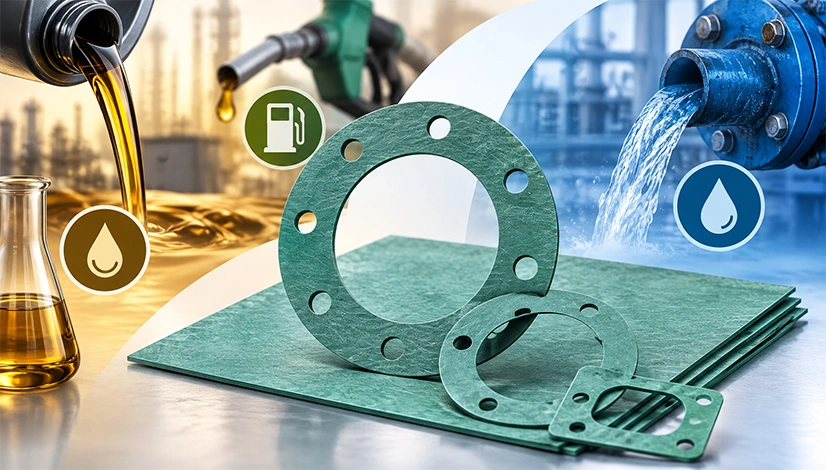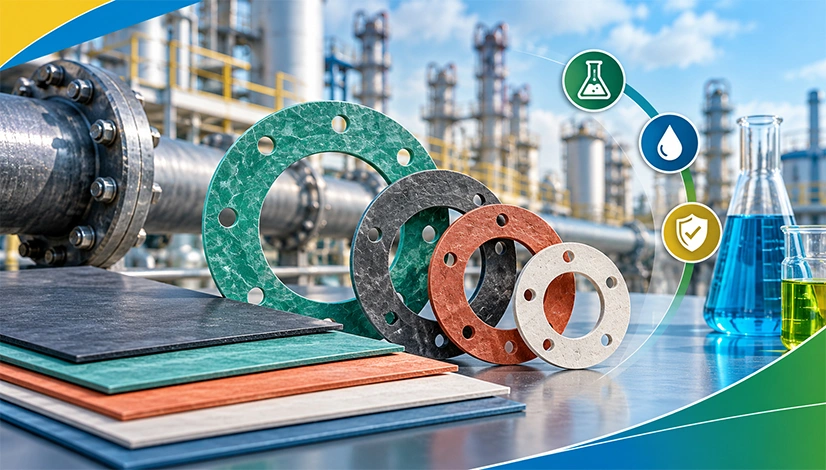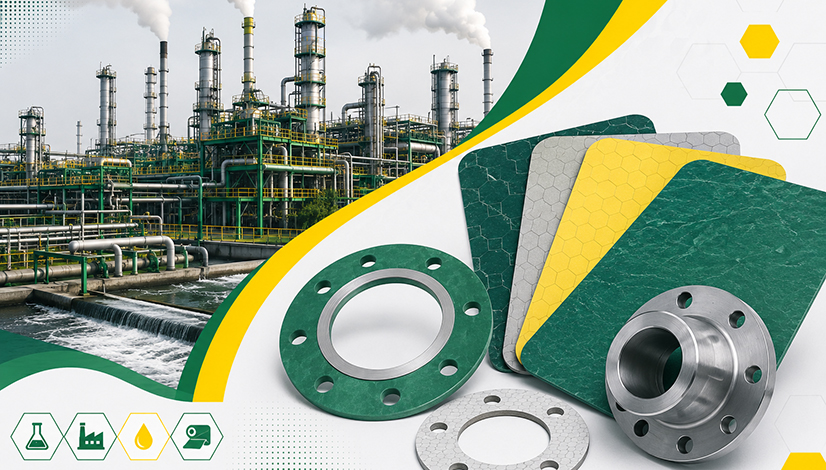

Gasket jointing sheets are essential components in industries where leak-proof sealing is critical. They are widely used across pipelines, machinery flanges, boilers, and chemical plants, ensuring system integrity even under high pressure, extreme temperatures, and chemical exposure.
Modern industries are increasingly shifting toward non-asbestos gasket sheets due to their safety, environmental compliance, and high performance, though asbestos jointing sheets are still employed in some high-temperature and high-pressure applications. At Charminar Jointings, both types are offered, giving engineers and procurement managers the flexibility to select products suited to their operational needs.
What is a Gasket Jointing Sheet?
A gasket jointing sheet is a flat sealing material placed between two flanged surfaces to prevent leakage of liquids, gases, or chemicals. It provides a reliable and durable seal, capable of withstanding variations in temperature, pressure, and chemical exposure. While traditional asbestos jointing sheets were widely used for their heat and mechanical resistance, modern non-asbestos gasket sheets now dominate industries requiring safer and eco-friendly solutions.
Types of Gasket Jointing Sheets
1. Non-Asbestos Gasket Sheets
Non-asbestos sheets are made from synthetic fibers, aramid, glass fibers, cellulose, NBR, PTFE, and graphite, offering excellent mechanical strength, chemical resistance, and heat tolerance.
Charminar Non-Asbestos Products:
- HNA Series (HNA-100, HNA-200, HNA-300): Aramid and glass fiber bonded with NBR, suitable for high-pressure, high-temperature pipelines.
- HT-50: Designed for high-temperature gasket applications up to 400°C, ideal for exhaust manifolds and heat shields.
- HYTITE-60: Cellulose fiber sheet with NBR binder, perfect for oil, fuel, water lines, carburetors, and chemical pumps.
Advantages:
- Completely asbestos-free and safe for workers.
- Long-lasting under extreme industrial conditions.
- Resistant to chemicals, heat, and pressure, ideal for industrial gasket sheets and flange sealing material.
- Compliant with modern environmental and safety regulations.
2. Asbestos Jointing Sheets
Asbestos sheets, made from compressed asbestos fiber (CAF), offer high-temperature and high-pressure resistance. Charminar’s CJ-9 series remains popular in applications demanding maximum mechanical strength.
Specifications:
- Maximum Operating Pressure: 35 Bar
- Maximum Temperature: 350°C
- Thickness: 0.25mm to 6mm
- Surface Finish: Red, Grey, Graphited
Although effective, asbestos sheets are regulated due to health risks, which is why modern industries often prefer non-asbestos alternatives.
Industrial Applications
Gasket jointing sheets are crucial across sectors, providing reliable sealing under critical conditions.
Steam Lines & Boilers:
Steam pipelines operate under high temperature and pressure. Non-asbestos sheets such as HNA-600 provide heat resistance and leak-proof performance while eliminating asbestos-related health risks. Ideal for industrial steam applications where safety and durability are priorities.
Oil & Gas Pipelines:
Transporting oil and gas involves high-pressure pipelines carrying flammable fluids. Non-asbestos chemical-resistant gasket sheets are preferred as they provide robust sealing and chemical compatibility, protecting both infrastructure and personnel.
Chemical Plants & Refineries:
Pipelines in chemical plants handle acids, solvents, and alkalis. Non-asbestos sheets like HT-50 and HYTITE-60 are favored for high chemical resistance and temperature tolerance, ensuring reliable sealing and operational safety.
Water & Wastewater Systems:
Water pipelines and wastewater systems require durable, corrosion-resistant sheets. Non-asbestos gasket sheets maintain tight seals under high pressure while resisting chemical corrosion, making them ideal for municipal and industrial water treatment systems.
Automotive & Machinery Flanges:
Machines and engines face temperature fluctuations and vibrations. Non-asbestos gasket sheets provide compression resistance, prevent blowouts, and maintain system efficiency in automotive flanges, compressors, and gearbox assemblies.
Material Properties & Selection Criteria
Selecting the right gasket sheet involves evaluating:
- Temperature Resistance: Non-asbestos sheets like HT-50 can withstand up to 400°C.
- Pressure Rating: HNA-600 series is suitable for high-pressure pipelines.
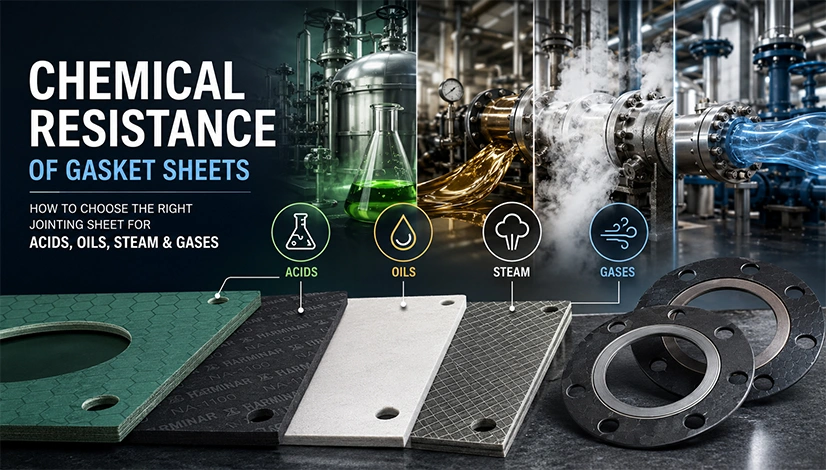
- Chemical Compatibility: Non-asbestos sheets resist acids, oils, and solvents, outperforming traditional asbestos in most chemical environments.
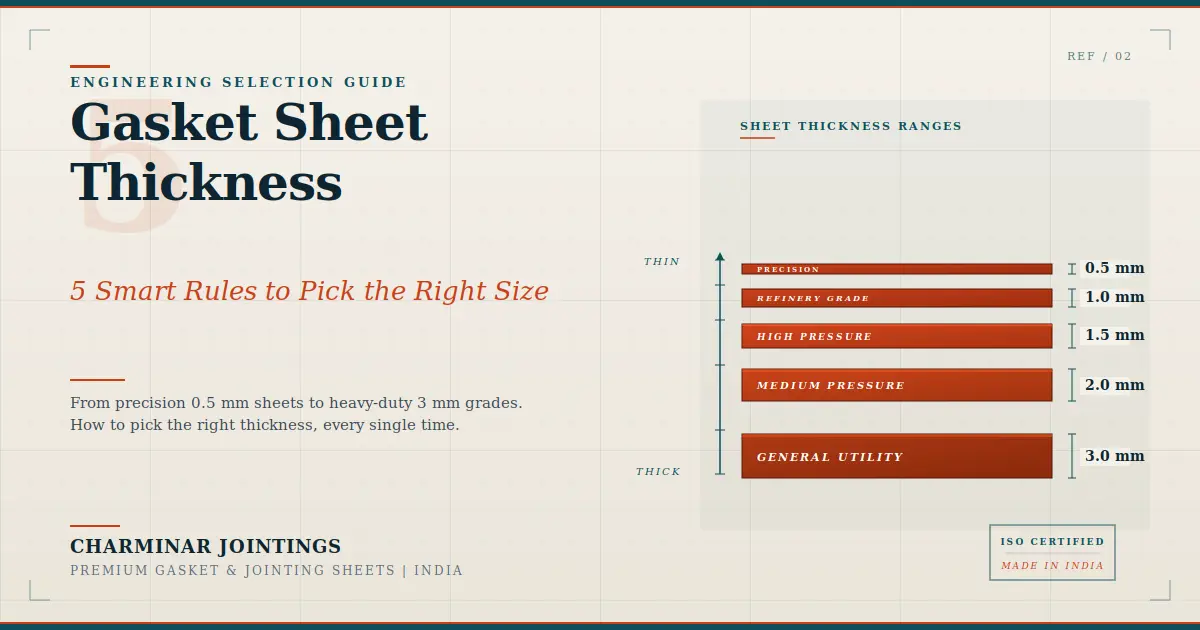
- Thickness & Size: Correct thickness ensures optimal compressibility and sealing performance.
- Industry Standards: Chemical, pharmaceutical, and food industries prefer non-asbestos gasket sheets for compliance and safety.
By considering these criteria, engineers can select industrial gasket sheets that provide reliable sealing while extending service life.
Maintenance Tips for Gasket Jointing Sheets
Proper maintenance maximizes gasket longevity and performance:
- Installation Practices: Clean flanges thoroughly, follow torque patterns, and avoid over-tightening bolts to prevent sheet damage.
- Inspection & Monitoring: Regularly inspect for creep, cracking, or blowouts. Non-asbestos sheets are easier to inspect safely than asbestos ones.
- Cleaning & Storage: Store sheets flat, dry, and away from chemicals or sunlight to prevent degradation.
- Replacement Guidelines: Replace sheets showing compression set, deformation, or leakage. Non-asbestos sheets are safe and easy to handle.
- Handling Safety: Non-asbestos sheets are safe, while asbestos sheets require PPE and regulated disposal.
Key Differences Between Non-Asbestos and Asbestos Sheets
| Feature | Non-Asbestos Sheets | Asbestos Sheets |
| Safety | Non-toxic, eco-friendly | Health risk, regulated |
| Heat & Pressure | High resistance, safe for modern industries | Excellent resistance, used in controlled setups |
| Industry Preference | Preferred in chemical, food, pharmaceutical | Traditional heavy industries |
| Handling & Disposal | Easy, minimal safety precautions | Requires PPE and proper disposal |
| Durability | Long-lasting, flexible | Durable but hazardous |
Frequently Asked Questions (FAQs)
Q1. Can gasket jointing sheets be reused?
A: Reuse is not recommended. Even slight deformation can compromise the seal. Non-asbestos sheets are more resilient, but replacement ensures optimal safety and sealing performance, reducing the risk of leaks or equipment damage.
Q2. Which sheet is better for chemical plants?
A: Non-asbestos gasket sheets are ideal due to their chemical resistance, high-temperature tolerance, and environmental compliance. Products like HNA-600 and HYTITE-60 are widely used in pipelines handling acids, oils, and solvents.
Q3. What is the temperature limit of non-asbestos sheets?
A: Non-asbestos sheets can withstand temperatures up to 400°C, such as HT-50 sheets, making them suitable for heat-intensive industrial processes.
Q4. Are non-asbestos sheets eco-friendly?
A: Absolutely. Being completely asbestos-free, they eliminate health hazards, comply with modern safety regulations, and support eco-friendly industrial operations.
Final Thoughts
Selecting the right gasket jointing sheet is essential for industrial safety, performance, and regulatory compliance. While asbestos sheets like CJ-9 still serve high-temperature applications, non-asbestos gasket sheets from Charminar Jointings provide a safer, eco-friendly, and durable solution.
By choosing the appropriate sheet, following proper installation and maintenance practices, and inspecting regularly, industries can ensure reliable sealing, minimize downtime, and protect personnel.