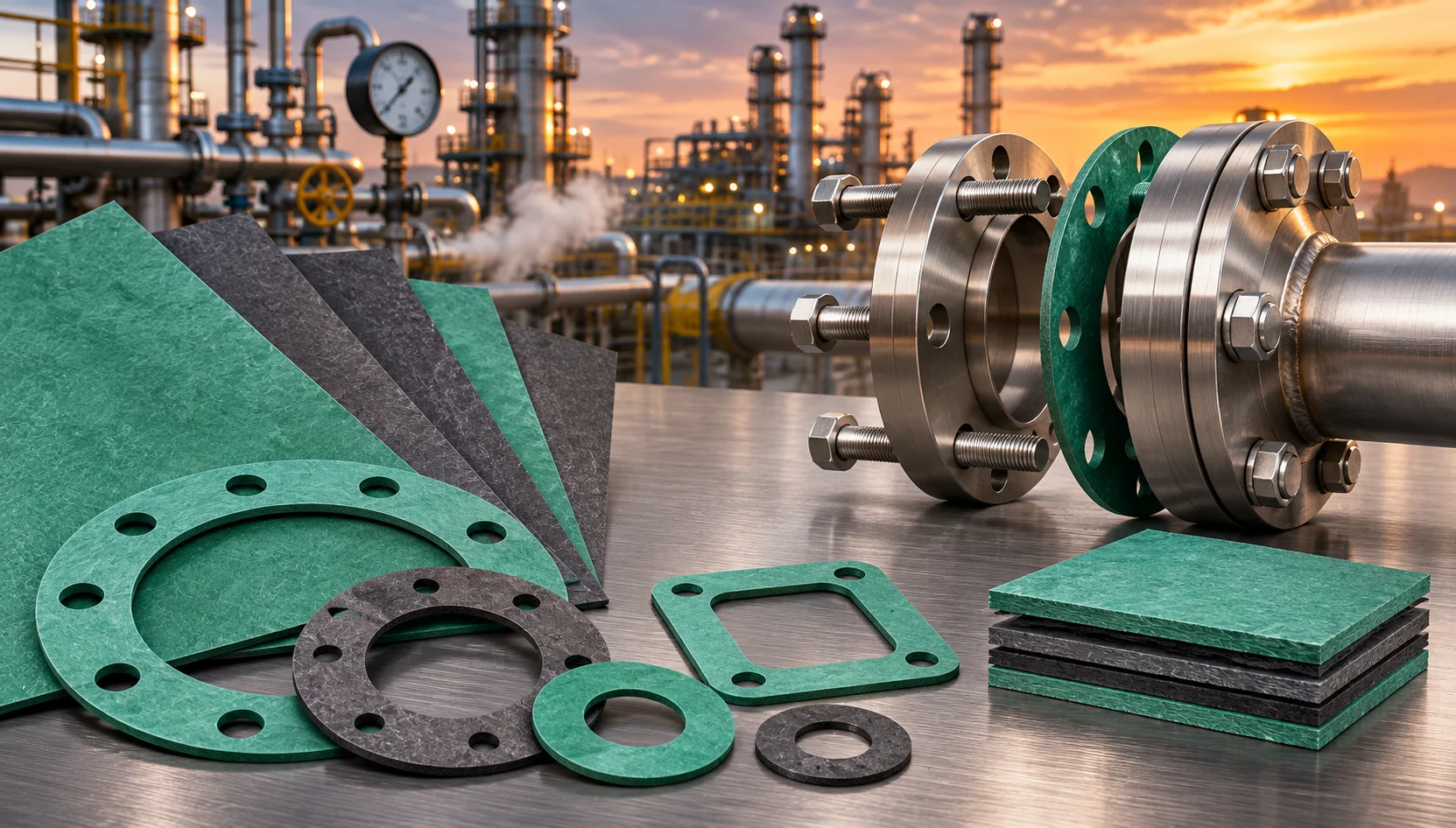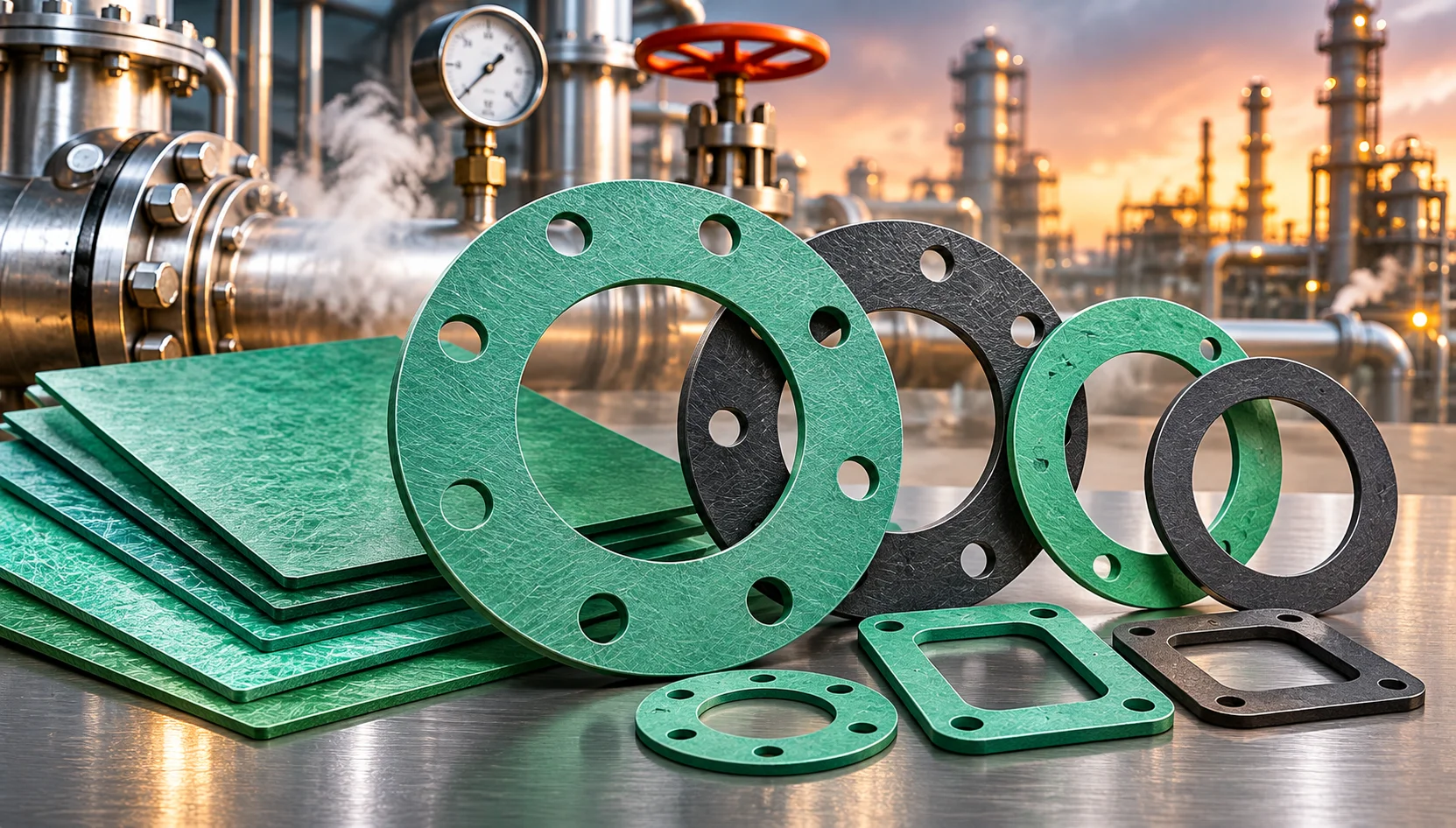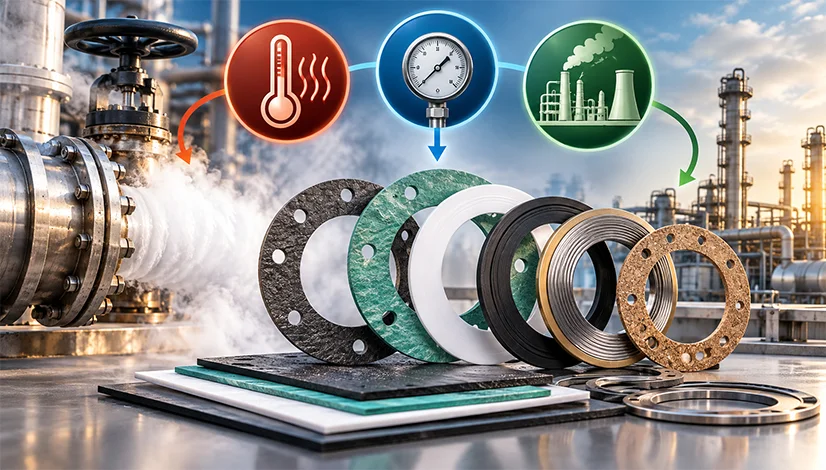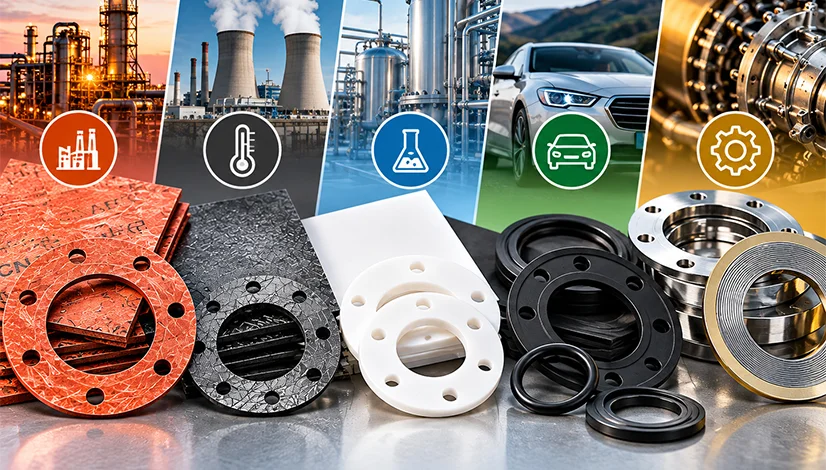
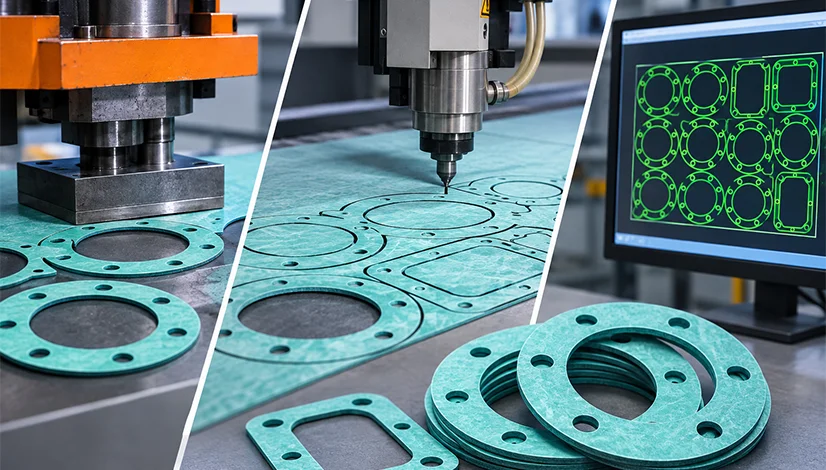
For an industrial gasket converter, an expensive mistake can begin before a gasket ever reaches a flange. A poorly positioned cutting pattern can waste usable sheet area, while a damaged edge or misplaced bolt hole can send an otherwise suitable part straight to rejection. That is why Gasket Sheet Cutting should be treated as a controlled manufacturing operation rather than simply a way to produce shapes.
OEM purchasing teams, maintenance suppliers and fabrication workshops must balance dimensional accuracy, throughput and material yield. The right approach depends on gasket geometry, sheet composition, thickness, order quantity and the equipment available. This guide explains how Gasket Sheet Cutting influences the finished part and how buyers can ask better questions when ordering material or converted gaskets.
Why Gasket Sheet Cutting Matters Beyond the Finished Shape
The job of Gasket Sheet Cutting is to turn a specified material into a repeatable component without introducing defects that threaten fit or sealing. Accurate outside dimensions matter, but so do inner openings, bolt-hole locations, narrow webs, corner quality and handling damage.
A cut edge with tears or delamination may indicate that the tool, feed speed or support surface needs attention. A gasket that looks acceptable by eye may still have an offset opening that interferes with assembly. These problems are especially costly when parts are produced in batches or supplied to an OEM line with fixed inspection criteria.
A sensible process therefore begins with an approved drawing, a material specification and an agreed inspection plan. The cutting method follows those requirements—not the other way around.
Choosing a Gasket Sheet Cutting Method for the Order
There is no universal winner between die cutting and digitally controlled cutting. Both can be appropriate, depending on production volume, part detail and material response.
Die Cutting: Repeatability for Established Profiles
In die cutting, a prepared tool presses a defined profile into the sheet. Steel-rule or other suitable dies can be economical when one part is required repeatedly and the tooling is designed for the material. The basic principle is described in this neutral reference on manufacturing dies.
For Gasket Sheet Cutting, the advantages may include short cycle times and consistent profiles once the tool and process are validated. However, a die introduces tooling cost and requires inspection as cutting edges wear. An inaccurate die can reproduce the same error across an entire order.
Before committing to tooling, confirm the revision-controlled drawing, hole sizes, minimum internal radii and acceptable dimensional tolerances. Test cuts using the actual material grade and thickness provide better evidence than assuming a die will behave identically on every sheet.
CNC Knife Cutting: Flexibility Without a Dedicated Die
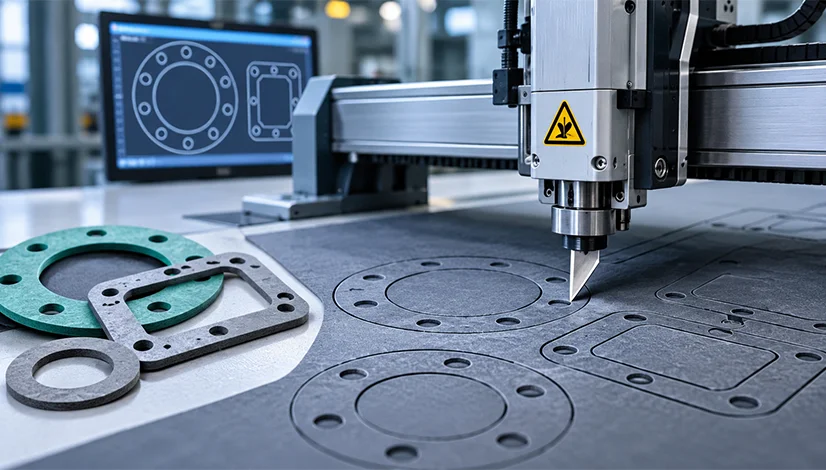
CNC-controlled knife systems follow a programmed path. This makes them useful for prototypes, varying profiles and smaller production runs where a physical die would be difficult to justify. A changed drawing may be accommodated through an updated program, provided the revision is checked and approved.
For Gasket Sheet Cutting, CNC knife cutting still needs process control. Blade choice, tool pressure, feed rate, sheet hold-down and corner strategy can affect edge appearance and accuracy. Some flexible sheets cut readily, while reinforced or thicker materials may need different settings or a different machine.
Not every CNC system is suitable for every gasket composition. Suppliers should confirm capabilities by trial and dimensional inspection rather than promising universal compatibility.
Other Options and Their Limitations
Waterjet and other specialised processes may suit selected materials or complex profiles, but each method needs evaluation for edge condition, moisture sensitivity, contamination, cost and safety. Laser cutting is not automatically appropriate for fibre-and-binder gasket sheets because heat may change edges or produce unwanted fumes. Material safety information and machine-specific trials should guide any decision.
How Gasket Sheet Cutting and Nesting Reduce Waste
Nesting is the arrangement of part outlines on a sheet or roll to obtain a useful yield. The concept is explained in this overview of manufacturing nesting. For Gasket Sheet Cutting, nesting is more than squeezing as many shapes as possible into a rectangle.
A good layout respects grain or fibre direction when the manufacturer identifies it as relevant, leaves practical clearance for the Gasket Sheet Cutting process and avoids weak scraps that cannot be handled. It also accounts for clamps, trim margins, surface defects and restrictions on rotating parts.
Consider an illustrative 1,000 mm by 1,000 mm sheet: its area is 1,000,000 square millimetres. If approved finished shapes together occupy 720,000 square millimetres, the theoretical area utilization is 72%. That does not mean the remaining 28% is entirely avoidable waste; tool clearance, unusable offcuts and handling requirements may be legitimate.
The simplest measure is:
Material utilization (%) = Total approved finished-part area ÷ Total sheet area consumed × 100
This estimate helps compare layouts, but Gasket Sheet Cutting performance should also consider rejected components, setup losses and whether leftovers can be used on later orders.
Practical Nesting Rules for Sheet and Roll Material
First, group orders that use the same approved material grade and thickness. Second, position large or irregular profiles before fitting small rings or washers into remaining spaces. Third, review orientation restrictions before rotating any shape. Fourth, store reusable remnants with their material identity so they do not become untraceable scraps.
When Gasket Sheet Cutting is planned across several compatible jobs, a converter may improve yield without compromising quality. The qualification is important: mixing unrelated grades or undocumented offcuts can create a far bigger problem than a few extra kilograms of waste.
Material Properties That Influence Gasket Sheet Cutting
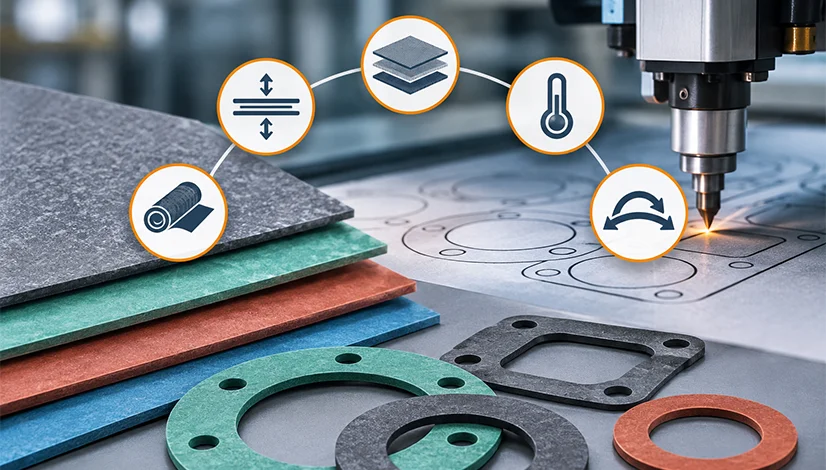
Two sheets of the same nominal thickness can respond differently under a cutting tool. Fibre reinforcement, binder composition, density, flexibility, coatings and sheet condition all matter. For example, excessive clamping can distort a compressible material, whereas insufficient support can leave ragged edges.
Before Gasket Sheet Cutting, confirm that the purchased grade matches the intended medium and operating requirements. Charminar Jointings lists multiple options in its non-asbestos jointing sheets range. Its beater addition and cellulose gasket material category also shows why converters should avoid treating all gasket sheets as interchangeable.
Roll-fed material introduces another issue: curl or tension from storage and unwinding. A sheet that has not been allowed to settle may shift during Gasket Sheet Cutting or inspection. Flatness checks and controlled handling should be part of the setup when they are relevant to the material.
Coatings, Thickness and Edge Integrity
Surface coatings may improve release or suit an application, but they can change how a sheet grips a bed or responds to tooling. Thickness determines which blades, dies and clearances are practical. Where a sheet is prone to edge cracking, trial parts should be inspected before full production.
The aim of Gasket Sheet Cutting is not to make every edge look cosmetically identical. It is to produce edges that meet the approved functional and dimensional requirements without cracks, missing material or contamination.
Quality Checks After Gasket Sheet Cutting
Quality is easier to protect when inspection is built into the workflow. A first-article check should compare the initial approved part with the latest drawing before releasing a production batch.
For Gasket Sheet Cutting, useful inspection points include outside diameter or perimeter, inside opening, bolt-hole size and position, thickness, visual edge condition and any drawing-specific features. Select measurement tools that match the tolerance; a ruler is not suitable for verifying a tightly controlled hole location.
Sampling frequency should reflect customer requirements, process stability and the consequences of failure. The operator should also record significant program changes, die maintenance and material lot changes. This makes a recurring defect easier to investigate instead of relying on memory.
Keep Dimensional Quality Separate from Material Suitability
A precisely cut gasket can still fail if the selected compound is unsuitable for the fluid, pressure or temperature. Conversely, an appropriate material can become unusable when its opening or bolt pattern is wrong. Gasket Sheet Cutting inspection and material selection therefore need separate acceptance criteria that work together.
OEM buyers should request a drawing revision, material grade identification and inspection evidence appropriate to the order. Where traceability is contractual, the Gasket Sheet Cutting batch should remain connected to the incoming material lot.
Common Gasket Sheet Cutting Mistakes to Avoid
One mistake is prioritising maximum nesting density over required clearances. Closely packed shapes may tear at narrow bridges or become difficult to remove without damage. Another is using an unverified digital file after a drawing revision; the machine may then produce beautifully consistent but incorrect parts.
A third problem is ignoring tool wear. Dull blades and damaged dies can introduce progressive edge defects. Poor housekeeping also matters: loose fibres, mixed offcuts and unidentified stock create avoidable inspection and traceability risks.
Finally, Gasket Sheet Cutting waste figures should never be judged in isolation. A layout that saves 3% in area but increases rejection or inspection effort could be worse for the overall order.
What Industrial Buyers Should Ask Their Supplier
Before ordering converted gaskets, share the part drawing, quantities, material grade, thickness, application conditions and tolerances. Ask whether the proposed Gasket Sheet Cutting method has been trialled on that exact grade and which dimensions will be inspected.
Discuss whether a dedicated die makes sense for repeat orders or whether CNC knife cutting provides better flexibility. Ask how leftover sheet material is identified and whether there are documented limits on reuse. Where the supplier provides sheets rather than finished gaskets, establish the converter's needs for sheet size, surface condition and packaging.
Buyers exploring industrial sheet options can review the Charminar Jointings product information and send specifications through its official contact details. Confirm the scope of available products and services directly rather than assuming every cutting process is offered in-house.
Conclusion: Better Utilization Starts With Better Process Control
Effective Gasket Sheet Cutting combines sound material selection, a suitable cutting method, disciplined nesting and measurable quality checks. Die cutting can suit established volumes; CNC-controlled knife cutting can offer flexibility. Neither method removes the need for validation, inspection and careful handling.
For industrial buyers, the useful question is not simply, “How many gaskets fit on a sheet?” It is, “How many approved gaskets can we produce consistently from the right material, with acceptable waste and reliable documentation?” Answering that question turns Gasket Sheet Cutting from a purchasing afterthought into a practical production-quality decision.